


When people evaluate a bonding solution, they often focus on the adhesive itself and assume that product quality alone will determine the result. In reality, long-term performance depends on a much wider set of factors, including substrate condition, tape selection, application pressure, environmental exposure, curing time, and the way the bonded parts are designed to carry load.
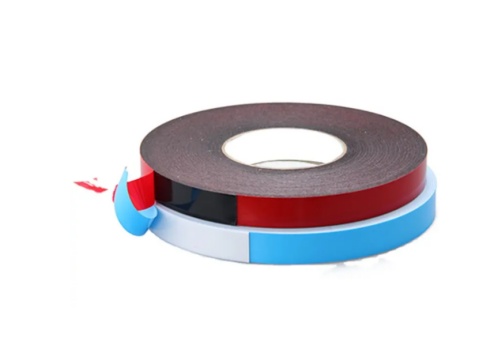
In modern manufacturing and product assembly, bonding materials are expected to do far more than simply stick two surfaces together. They need to absorb stress, support long-term durability, simplify installation, improve appearance, and adapt to a wide range of materials, from metals and plastics to glass and painted substrates.
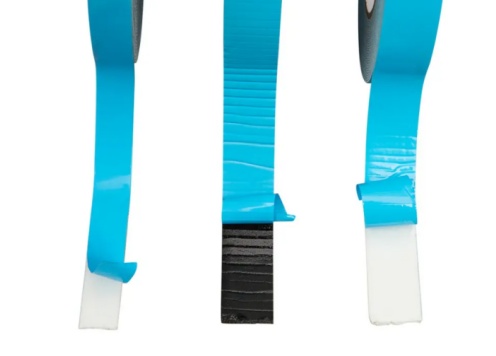
Choosing the right tape may seem simple at first, but in real production and assembly work, the decision has a direct impact on bonding performance, product appearance, durability, and even manufacturing efficiency. A tape that is too thin may fail to compensate for uneven surfaces, while a tape with the wrong adhesive system may lose tack under heat, moisture, or continuous stress.

In any shipping or fulfillment environment, speed is never just about working faster. It is about reducing friction at every step so that people, materials, and processes move smoothly together. Many businesses spend time optimizing box sizes, labeling systems, storage layouts, and picking routes, but they often overlook one of the simplest factors in the entire workflow: Packing Tape. The tape you choose affects how quickly cartons are sealed, how securely packages travel, how often workers need to reapply strips, and how efficiently packing stations can operate under pressure.


When people evaluate a bonding solution, they often focus on the adhesive itself and assume that product quality alone will determine the result. In reality, long-term performance depends on a much wider set of factors, including substrate condition, tape selection, application pressure, environmental exposure, curing time, and the way the bonded parts are designed to carry load.
In modern manufacturing and product assembly, bonding materials are expected to do far more than simply stick two surfaces together. They need to absorb stress, support long-term durability, simplify installation, improve appearance, and adapt to a wide range of materials, from metals and plastics to glass and painted substrates.
Choosing the right tape may seem simple at first, but in real production and assembly work, the decision has a direct impact on bonding performance, product appearance, durability, and even manufacturing efficiency. A tape that is too thin may fail to compensate for uneven surfaces, while a tape with the wrong adhesive system may lose tack under heat, moisture, or continuous stress.
In any shipping or fulfillment environment, speed is never just about working faster. It is about reducing friction at every step so that people, materials, and processes move smoothly together. Many businesses spend time optimizing box sizes, labeling systems, storage layouts, and picking routes, but they often overlook one of the simplest factors in the entire workflow: Packing Tape. The tape you choose affects how quickly cartons are sealed, how securely packages travel, how often workers need to reapply strips, and how efficiently packing stations can operate under pressure.


