
Views: 0 Author: Site Editor Publish Time: 2026-04-21 Origin: Site


In modern manufacturing and product assembly, bonding materials are expected to do far more than simply stick two surfaces together. They need to absorb stress, support long-term durability, simplify installation, improve appearance, and adapt to a wide range of materials, from metals and plastics to glass and painted substrates. This is why Foam Double Sided Tape has become such an important solution across industries including automotive, construction, electronics, appliances, signage, and general industrial fabrication. Compared with traditional fastening methods, foam tape often offers a cleaner finish, more efficient assembly, and better performance in applications where vibration, movement, moisture, or uneven surfaces are involved. As design standards continue to evolve toward lighter structures and faster production workflows, understanding the practical benefits of foam double sided tape helps buyers and engineers make better material decisions, not only for initial bonding, but for long-term product reliability as well.
The popularity of foam tape is not accidental. Manufacturers and installers increasingly need fastening solutions that reduce labor, improve aesthetics, and work well with modern materials. Mechanical fasteners can leave visible marks, add weight, create stress concentration, or require drilling. Liquid adhesives may involve curing time, mess, or additional process control.
By contrast, Foam Double Sided Tape offers a pressure-sensitive bonding solution that is fast, clean, and versatile. It can bond dissimilar materials, compensate for slight irregularities, and provide a more uniform stress distribution across the bonded area. In many applications, that combination is extremely valuable.
Several trends have contributed to its wider adoption:
· increased use of lightweight plastics and composites
· growing demand for cleaner exterior surfaces
· need for faster assembly in production lines
· preference for low-noise, vibration-resistant bonding
· pressure to reduce secondary processing steps
Rather than being seen as a simple accessory, foam tape is now often considered an engineered bonding component.
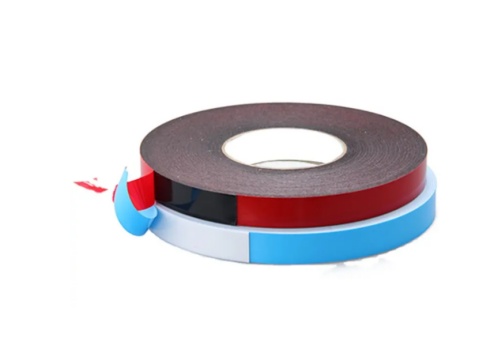
At its core, Foam Double Sided Tape is a tape made with a foam carrier coated with adhesive on both sides. The foam layer is more than just a spacer. It gives the product compressibility, conformability, cushioning, and gap-filling capability.
A typical foam tape includes:
· a foam backing or carrier
· adhesive coatings on both sides
· a release liner for handling and application
Unlike film-based double sided tapes, foam-backed tapes can adapt more easily to rough, textured, or uneven surfaces. This flexibility helps improve contact area and contributes to more reliable bonding.
Foam tape is often selected not only for adhesion strength, but also for:
· shock absorption
· vibration damping
· sealing against dust or moisture
· thermal expansion compensation
· cleaner visual finish
This combination makes it especially useful in assemblies where structural movement or environmental stress is expected.
A high-quality Foam Double Sided Tape can create a strong bond across a broad surface area. Unlike screws or rivets that concentrate force at specific points, tape distributes stress more evenly, which may help reduce localized material fatigue.
The foam core allows the tape to absorb movement, impact, and vibration. This is particularly useful in automotive interiors, appliance panels, electronic housings, and mounted decorative components.
Many real-world substrates are not perfectly flat. Foam tape can compress slightly and adapt to small surface irregularities, helping achieve better contact and more reliable adhesion than rigid fastening materials.
In certain applications, foam tape can help reduce dust ingress, moisture penetration, or rattling. This added sealing function makes it attractive in exterior and semi-exposed assemblies.
Because it is hidden between bonded surfaces, foam tape supports a cleaner visual design. It eliminates exposed screws, weld marks, or adhesive overflow, which is important for consumer-facing products and architectural elements.
Pressure-sensitive bonding can reduce production time. There is no curing stage like with many liquid adhesives, and no drilling or additional surface damage as with mechanical fasteners.
Not all foam tapes are the same. Performance depends heavily on the foam carrier, the adhesive system, and the application environment. Understanding the main categories helps buyers choose the right product.
Foam Type | Typical Characteristics | Common Uses | Key Advantage |
PE Foam Tape | Soft, lightweight, economical | General mounting, trim, signage | Good cost-performance balance |
EVA Foam Tape | Flexible, resilient, shock-absorbing | Decorative parts, interior bonding | Strong cushioning ability |
Acrylic Foam Tape | High bond strength, weather resistant | Automotive trim, exterior panels, durable mounting | Excellent long-term outdoor performance |
PU Foam Tape | Soft, compressible, adaptable | Sealing and cushioning applications | Good conformability |
The adhesive system is equally important. Rubber-based adhesives may provide strong initial tack, while acrylic adhesives often offer better long-term aging, temperature resistance, and weather stability. Choosing the right combination matters more than choosing by thickness alone.
When deciding between tape, liquid adhesive, and mechanical fastening, the best choice depends on the full application context. Still, foam tape offers several clear advantages in common industrial scenarios.
Mechanical fasteners remain useful where disassembly or very high structural loading is required. However, they often introduce several limitations:
· visible fastening points
· possible substrate damage
· added weight
· risk of corrosion in certain environments
· uneven stress at the fastening point
A double sided mounting tape can reduce or eliminate these concerns in non-structural and semi-structural assemblies.
Liquid adhesives can deliver very strong bonds, but they may require dispensing equipment, curing time, ventilation management, or cleanup. Foam tape simplifies the process. It is easier to handle, more consistent in thickness, and often more efficient in high-volume production.
Thin film tapes work well on smooth and flat surfaces, but they generally do not provide the same gap-filling or vibration-damping ability as foam-backed alternatives. In applications involving surface mismatch, movement, or cushioning needs, foam tape often performs better.
The value of Foam Double Sided Tape becomes easiest to understand when viewed through actual use cases.
Foam tape is frequently used for:
· trim and emblem attachment
· mirror components
· interior decorative parts
· anti-vibration mounting
· sealing and cushioning between panels
In these applications, the tape must tolerate temperature changes, movement, and long-term stress.
Manufacturers use foam adhesive tape for assembly in devices and electrical systems for:
· display frame mounting
· panel attachment
· cushioning delicate components
· insulation-related spacing
· noise reduction in compact housings
Because electronic products often involve lightweight substrates and precise appearance requirements, foam tape can be a very practical option.
Sign makers and display fabricators rely on industrial foam tape for clean mounting without visible hardware. It is especially useful for indoor panels, decorative letters, lightweight boards, and promotional fixtures.
Foam tape is widely applied in the installation of:
· trims and moldings
· mirrors
· wall accessories
· partition components
· glazing-related cushioning elements
Its ability to provide a neat finish and compensate for slight surface irregularity makes it suitable for many finishing tasks.
From our perspective, foam tape is most effective when it is treated as a technical material rather than a generic accessory. Different industries require different balances of adhesion, cushioning, thickness, weather resistance, and process efficiency, and that is why product selection should be based on actual application needs instead of assumptions. At Zhejiang Quansheng New Material Technology Co., Ltd., we believe that a suitable Foam Double Sided Tape solution should support both performance and practicality, whether the goal is cleaner assembly, better shock absorption, improved sealing, or more efficient production. For readers comparing bonding options for industrial or commercial use, it may be worthwhile to learn more from Zhejiang Quansheng New Material Technology Co., Ltd. and evaluate which tape structure is the most appropriate for the specific substrates, environment, and performance expectations of the project.
It is mainly used for bonding, mounting, cushioning, sealing, and vibration reduction in industries such as automotive, electronics, signage, appliances, and construction.
No. Screws may still be better for applications requiring disassembly or very high structural load capacity. Foam tape is often better where appearance, vibration control, gap filling, and faster assembly are priorities.
Yes, certain types can. Acrylic foam tapes in particular are often chosen for outdoor applications because they usually offer better weather resistance, UV stability, and long-term durability.
Clean the substrate thoroughly, apply the tape at a suitable temperature, use even pressure during installation, and allow enough time for the adhesive bond to build after application.


