
Views: 0 Author: Site Editor Publish Time: 2026-02-12 Origin: Site


Can drivers see your trailer at night? Many utility trailers are hard to spot. Reflective Tape makes edges clear. But where should you place it?
In this article, you will learn the right spots. We will explain safe and proper placement.
Proper placement of Reflective Tape on utility trailers is governed by visibility logic rather than decoration. Whether using standard trailer reflective tape or certified 3M reflective tape, the goal is the same: clearly define trailer length, width, and height boundaries under headlight illumination. While regulatory thresholds often apply to larger trailers, following structured marking principles improves safety and reduces risk exposure for all utility trailer operators.
Below are the three structural marking zones that determine compliant and effective placement.
Side conspicuity is achieved by marking a substantial portion of each trailer side. Standard practice requires trailer reflective tape to cover at least 50% of the total side length, installed horizontally along the lower structural edge. This creates a continuous reflective line that communicates trailer length to approaching drivers at night.
High-intensity materials such as 3M reflective tape are often selected in commercial applications because of their consistent light return and durability, especially on frequently used utility trailers.
Side placement should prioritize structural members rather than decorative panels. The lower side rail or outer frame beam provides the most stable surface for long-term adhesion and visibility.
Key placement principles for side coverage:
● Tape must run horizontally, not vertically or diagonally.
● Segments can be continuous strips or evenly spaced sections, provided total coverage meets minimum distribution.
● Placement should remain within the typical headlight beam zone (generally 15–60 inches above the road surface).
Side Placement Factor | Recommended Practice | Purpose |
Coverage Length | ≥ 50% of each side | Ensures visible trailer outline |
Orientation | Horizontal only | Maintains continuous light return |
Mounting Surface | Lower frame rail | Structural stability & durability |
Segment Layout | Continuous or evenly spaced | Avoids visual gaps |
This structured approach ensures that side conspicuity remains effective even when cargo is loaded above the deck.
The lower rear section of a utility trailer must be fully defined. Reflective Tape should extend across the entire rear width, typically mounted on the rear bumper, underride guard, or lowest structural cross member. This horizontal band signals full trailer width to following drivers and reduces rear-end collision risk in low-light conditions.
For regulated applications, alternating red-and-white trailer reflective tape is required in this zone. High-performance options such as 3M reflective tape are commonly used where long-term weather resistance and high reflectivity are priorities.
When applying rear tape:
● Extend strips as close to outer edges as possible.
● Avoid breaking the reflective line around hardware unless structurally necessary.
● Do not overlap brake lights or obscure reflectors.
Unlike the lower rear section, the upper rear corners use white or silver Reflective Tape only. These markings must form two inverted “L” shapes—one at each upper rear corner—with each leg measuring at least 12 inches.
This configuration differs from the red-white striping below. Instead of defining width, the inverted “L” pattern defines trailer height and upper boundary limits. When high-grade 3M reflective tape or equivalent materials are used, these corner indicators remain highly visible even at longer approach distances.
Upper Rear Placement Checklist:
● Install one inverted “L” on each upper corner.
● Use white/silver tape only in this zone.
● Keep the vertical segment aligned with the trailer’s outermost edge.
● Avoid placing below the top structural frame line.
Understanding regulatory zones is only the first step. Practical placement depends on trailer construction, structural components, and intended usage. Proper mapping ensures that Reflective Tape adheres to durable surfaces and maintains long-term visibility performance.
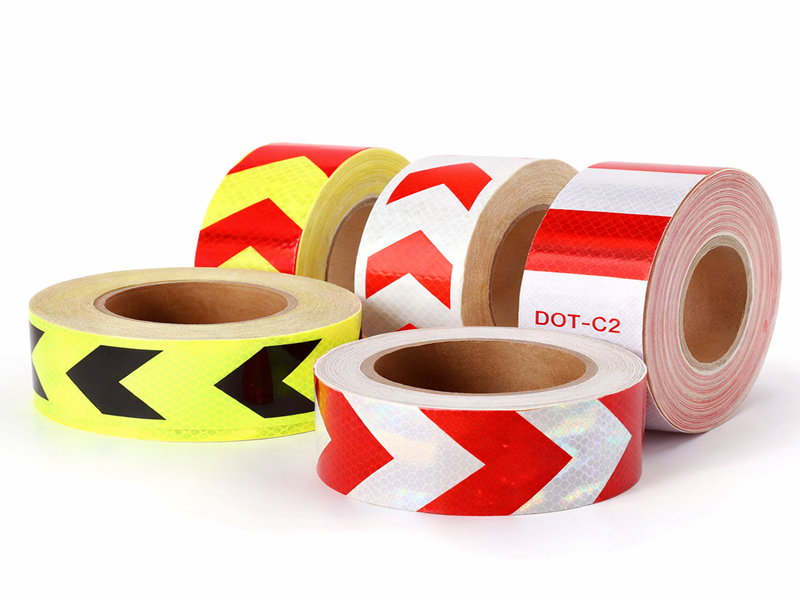
For most open utility trailers, the outer lower frame rails provide the most effective placement location. These rails run horizontally along the base of the trailer and create a stable structural reference line. Installing trailer reflective tape along this beam produces a continuous reflective boundary visible regardless of cargo configuration.
Frame rail placement offers measurable advantages:
● Structural rigidity reduces adhesive failure.
● Straight alignment improves reflective continuity.
● Tape remains visible even when cargo partially obstructs side panels.
Avoid installing tape on removable stake sides, wooden boards, or detachable panels, as movement can disrupt reflective consistency.
The rear-most structural edge is the primary nighttime reference point for following drivers. Reflective Tape should extend nearly edge-to-edge along the lowest stable crossbar to clearly define trailer width.
To maintain performance:
● Keep the reflective band level and uninterrupted.
● Align strips parallel to the road surface.
● Leave spacing from tail lamps to prevent visual blending.
Flatbed utility trailers particularly benefit from this approach because they lack tall vertical surfaces that naturally reflect light.
Different trailer designs require slight adjustments, but structural integrity must always take priority over aesthetic alignment. Whether using standard trailer reflective tape or premium 3M reflective tape, the mounting surface should remain rigid and properly positioned within the recommended height zone.
Trailer Type | Recommended Tape Location | Special Considerations |
Mesh-Side Trailer | Along lower perimeter tubing | Avoid flexible mesh panels |
Flatbed Trailer | Along deck edge beam | Maintain straight alignment |
Ramp-Gate Trailer | Fixed frame sections only | Do not cross hinge joints |
Fendered Trailer | Outer structural beam | Avoid curved plastic surfaces |
When applying Reflective Tape to ramp-equipped trailers, ensure placement remains on fixed structural members rather than moving joints. On fendered designs, curved plastic components may reduce adhesion strength and long-term durability.
Careful structural mapping ensures that Reflective Tape—whether standard trailer reflective tape or high-intensity 3M reflective tape—remains compliant, durable, and visually effective over time.
Correct placement of Reflective Tape is not only about horizontal positioning along the trailer body—it also depends heavily on vertical alignment and spatial clearance. Height determines whether headlights will effectively activate the reflective surface, while spacing from lighting components ensures that reflective markings complement, rather than confuse, existing safety systems. Improper height or crowding around lamps can reduce visibility performance even if coverage requirements are technically met.
The vertical centerline of Reflective Tape should be positioned between 15 and 60 inches above the road surface. This range corresponds to the most effective headlight illumination zone for passenger vehicles and commercial trucks. Mounting below this zone increases exposure to road spray, salt accumulation, and debris impact. Mounting above it risks placing the reflective material outside the strongest beam concentration, especially for low-profile vehicles.
In practice, the ideal placement is along the lower structural frame rail, provided it falls within the recommended height window. If the trailer deck is unusually low or high, adjustments should be made to maintain compliance with the illumination zone rather than simply following body lines.
Height Optimization Considerations:
● Measure from the road surface to the tape’s centerline, not its top edge.
● Ensure consistent height along the entire side length to maintain a uniform reflective line.
● Avoid sloping placement unless the trailer frame itself is angled.
Mounting Height Range | Performance Impact | Risk if Outside Range |
Below 15 inches | Increased dirt accumulation | Reduced reflectivity over time |
15–60 inches | Optimal headlight return | Maximum conspicuity |
Above 60 inches | Reduced beam exposure | Limited nighttime visibility |
Maintaining consistent height across both sides ensures symmetrical visibility from multiple angles.
Reflective Tape must never interfere with primary lighting equipment. Trailer brake lights, turn signals, and side marker lamps serve as active light sources, while Reflective Tape functions as passive illumination. When these elements overlap visually, drivers may struggle to distinguish signal intention from reflective glare.
Proper clearance ensures that each safety device performs its role independently. Spacing between Reflective Tape and lighting components prevents visual blending and maintains regulatory integrity.
Clearance Best Practices:
● Maintain a minimum separation distance from side marker lamps and signal lights (commonly around 3 inches).
● Avoid placing Reflective Tape directly over reflector housings or lamp lenses.
● Ensure reflective strips do not wrap around corners where lighting transitions occur.
In well-planned layouts, Reflective Tape acts as a frame that enhances light contrast rather than competing with it. Proper spacing improves clarity during braking, turning, and lane changes.
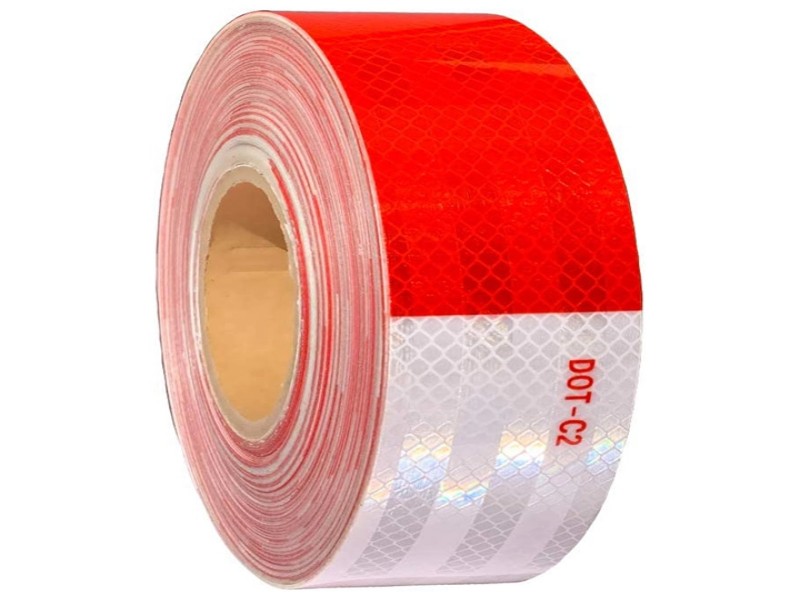
Long-term durability depends not only on where Reflective Tape is installed, but how it is applied. Environmental exposure, temperature fluctuations, vibration, and surface condition all influence adhesion strength. Applying tape correctly at the outset reduces premature peeling, curling, or fading.
A clean, properly prepared surface is essential for strong adhesion. Contaminants such as oil residue, wax, dust, or moisture can weaken the bond between the adhesive backing and the trailer surface. Even high-quality Reflective Tape will fail prematurely if installed over a contaminated substrate.
Before installation:
● Wipe surfaces thoroughly with isopropyl alcohol to remove grease and residue.
● Allow the area to dry completely before applying tape.
● Avoid applying to freshly painted surfaces until paint has fully cured, as residual vapors can interfere with adhesive bonding.
Galvanized or textured metal surfaces may require additional pressure during application because adhesion occurs primarily on surface high points rather than recessed areas.
Uniform pressure during installation ensures complete contact between adhesive and substrate. Uneven application may leave air pockets or micro-gaps that allow moisture intrusion over time. A rubber roller or plastic scraper provides consistent pressure without damaging the reflective surface.
Optimal installation conditions include moderate temperatures—typically between 40°F and 85°F—where adhesives remain pliable but stable. Extremely cold conditions can stiffen adhesive backing, while excessive heat may soften it prematurely.
Application Guidelines:
● Apply tape in straight, controlled sections rather than stretching it.
● Use firm, even pressure across the full length immediately after placement.
● Verify alignment before final pressure is applied, as repositioning becomes difficult once adhesion strengthens.
Proper installation technique contributes as much to long-term performance as correct placement.
Even when coverage and height guidelines are followed, certain installation mistakes can reduce effectiveness or compromise compliance. These errors often stem from aesthetic decisions or convenience rather than structural logic.
Common Error | Why It’s Problematic | Corrective Approach |
Mixing color zones | Confuses rear vs. upper marking logic | Follow designated red-white and white-only zones |
Insufficient side coverage | Breaks continuous reflective outline | Ensure minimum 50% distribution |
Applying to flexible panels | Leads to peeling and cracking | Use rigid structural components |
Obstruction by hardware | Reduces reflective visibility | Keep cargo fixtures clear of tape |
Additional mistakes include applying tape over hinges, ramp joints, or detachable side panels, which may flex or shift during operation. Reflective surfaces should remain uninterrupted and visible regardless of trailer configuration or cargo load.
Proper Reflective Tape placement means more than simple strips. Mark half of each side. Cover the full lower rear. Add upper corner “L” marks. Keep height within range. Aligned on strong frames, it defines trailer shape and improves night visibility.
Zhejiang Quansheng New Material Technology Co., Ltd. offers durable, high-intensity tape. Their products resist weather and provide long-term road safety value.
A: Reflective Tape should run along at least 50% of each side, across the full lower rear, and form inverted “L” markings on upper rear corners.
A: Reflective Tape centerline should be mounted between 15 and 60 inches above the road surface for optimal headlight visibility.
A: Reflective Tape should only be applied to rigid structural components, not moving hinges or flexible plastic fenders.
A: Reflective Tape must cover a minimum of 50% of each trailer side length in a horizontal layout.


