
Views: 0 Author: Site Editor Publish Time: 2026-02-19 Origin: Site


Can you see clearly at night? Many crashes happen in low light. Reflective Tape helps people and vehicles stay visible. It is a retroreflective safety material. It sends light back to drivers. In this article, you will learn where it is used. We will explore roads, trucks, and workplaces.
Reflective Tape plays a critical role in everyday safety by functioning as a passive visibility system. Unlike powered lighting or electronic warning devices, it does not require electricity to operate. Instead, it relies on retroreflection to return light—such as vehicle headlights—directly back toward the source. This makes hazards, boundaries, and moving individuals more noticeable in low-light or nighttime conditions.
In both public infrastructure and private properties, high visibility tape reduces preventable accidents by providing early visual cues. When depth perception is limited at night, clearly marked edges and obstacles allow pedestrians and drivers to react sooner. As a result, Reflective Tape helps minimize trips, vehicle scrapes, minor collisions, and structural damage that often occur due to poor visibility rather than negligence. In higher-demand environments, materials such as 3M reflective tape are often selected for their consistent brightness and durability in outdoor conditions.
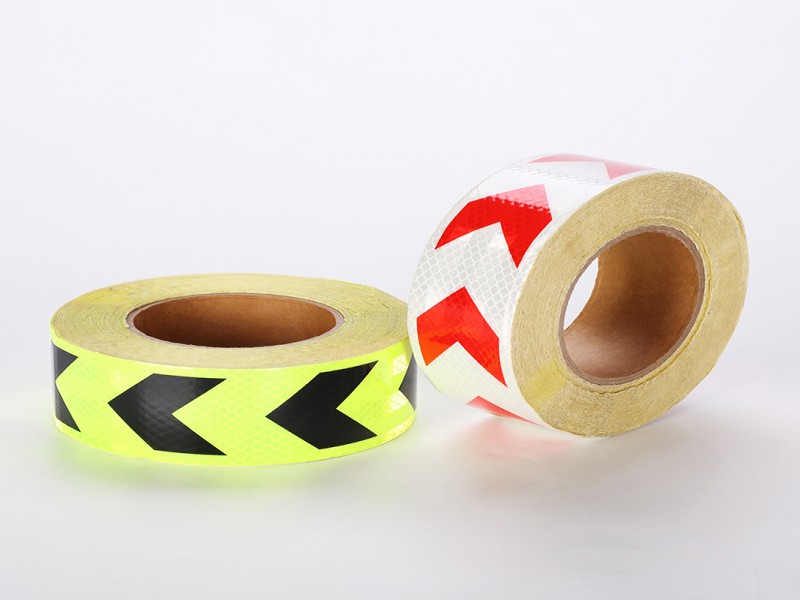
In built environments, many injuries occur because structural elements blend into their surroundings after dark. Reflective Tape is frequently applied to fixed hazards to create strong visual contrast. By outlining edges and corners, it transforms passive objects into clearly identifiable boundaries.
Common structural applications include:
● Stair edges in parking garages and commercial buildings
● Loading dock platforms in warehouses
● Bollards, poles, and concrete barriers in vehicle zones
● Low overhead beams in storage areas
Below is a simplified comparison of typical hazard-marking scenarios and their safety purpose:
Location Type | Typical Risk | Role of Reflective Tape |
Stairways & Ledges | Trips and missteps | Highlights step edges and elevation changes |
Loading Docks | Falls or vehicle misalignment | Improves dock edge visibility |
Parking Structures | Vehicle scraping or corner impacts | Outlines poles and structural corners |
Residential Driveways | Nighttime vehicle damage | Marks gate arms, mailbox posts, curbs |
In residential settings, homeowners often use Reflective Tape on gate posts, fence corners, or narrow driveways to reduce accidental contact. These applications are simple but effective in preventing property damage during nighttime parking or reversing.
Beyond fixed structures, Reflective Tape is widely used to delineate movement pathways. In public buildings, it may outline emergency exit routes, pedestrian corridors, or floor-level guidance strips. During power outages or reduced lighting conditions, these reflective markers remain visible when illuminated by flashlights or emergency lighting.
Personal visibility is another major use case. Reflective strips are commonly attached to backpacks, helmets, bicycles, and outerwear. For pedestrians and cyclists, especially in urban environments, this added visibility significantly increases detection distance by drivers. The principle is straightforward: the sooner a driver identifies a person or object, the more time there is to adjust speed or direction safely.
In everyday environments, Reflective Tape supports:
● Safer evening walking routes
● Increased cyclist visibility at intersections
● Improved identification of children’s school bags in winter months
● Enhanced awareness around shared residential roads
By acting as a low-maintenance safety enhancement, Reflective Tape bridges the gap between infrastructure lighting and personal protective visibility.
Industrial environments present unique visibility challenges. Warehouses, factories, and logistics centers often operate with partial lighting, high shelving, and moving equipment. In these settings, Reflective Tape functions as a supplemental safety layer that reinforces visual awareness without requiring constant electrical systems.
In high-traffic operational areas, reflective safety marking supports accident prevention strategies by:
● Increasing the visibility of equipment boundaries
● Clarifying traffic lanes within facilities
● Identifying hazardous machinery zones
● Improving worker awareness during night shifts
Unlike paint markings, reflective safety marking remains effective when illuminated by forklift headlights or handheld lights. This makes it especially valuable during early morning or overnight operations when ambient lighting may be reduced.
Mobile equipment represents one of the highest risk factors in industrial settings. Forklifts, pallet trucks, cranes, and tractors move continuously through narrow aisles and shared pedestrian zones. Applying Reflective Tape to equipment edges improves detectability and spatial awareness.
Typical equipment applications include:
● Forklift rear frames and counterweights
● Crane arms and lifting structures
● Tractor body contours in agricultural facilities
● Warehouse carts and transport trolleys
In dim environments, reflective strips increase contrast between machinery and background shelving. This helps prevent side collisions, blind-spot incidents, and low-speed impacts that commonly occur in distribution centers.
Reflective Tape is also used to reinforce physical boundaries within industrial facilities. While painted lines provide daytime guidance, reflective overlays enhance nighttime visibility and improve compliance with safety zoning systems.
Common facility-level applications include:
● Marking clearance zones around high-voltage panels
● Outlining restricted areas near automated systems
● Identifying emergency equipment stations
● Reinforcing pedestrian walkways adjacent to loading areas
The following table illustrates how reflective marking integrates into facility safety systems:
Marking Type | Safety Objective | Operational Benefit |
Clearance Zone Outlines | Prevent encroachment into hazardous areas | Reduces electrical and mechanical accidents |
Pedestrian Lane Marking | Separate workers from vehicle traffic | Improves internal traffic flow |
Equipment Boundary Lines | Define safe working distances | Supports compliance with safety procedures |
Emergency Station Markers | Rapid identification in urgent situations | Decreases response time during incidents |
In transportation-linked industrial operations, trailer reflective tape is frequently applied to yard trucks, loading trailers, and dock transfer vehicles. This improves visibility during nighttime maneuvering and reduces collision risks in shared warehouse yards.
Large commercial vehicles operate under very different visibility conditions compared to passenger cars. Due to their height, length, and wide turning radius, trucks and trailers can be difficult to perceive accurately at night. This is where Reflective Tape becomes a critical road safety component. By outlining the physical dimensions of a vehicle, it enhances vehicle conspicuity—the ability of other road users to detect and recognize a vehicle in time to react safely.
Vehicle conspicuity is not simply about brightness; it is about shape recognition and spatial awareness. When headlights strike reflective markings positioned along a trailer’s frame, the vehicle’s outline becomes visually defined. Drivers approaching from behind or alongside can better estimate distance, speed, and vehicle boundaries. This early recognition reduces rear-end collisions, side-swipe incidents, and lane misjudgments in low-light conditions.
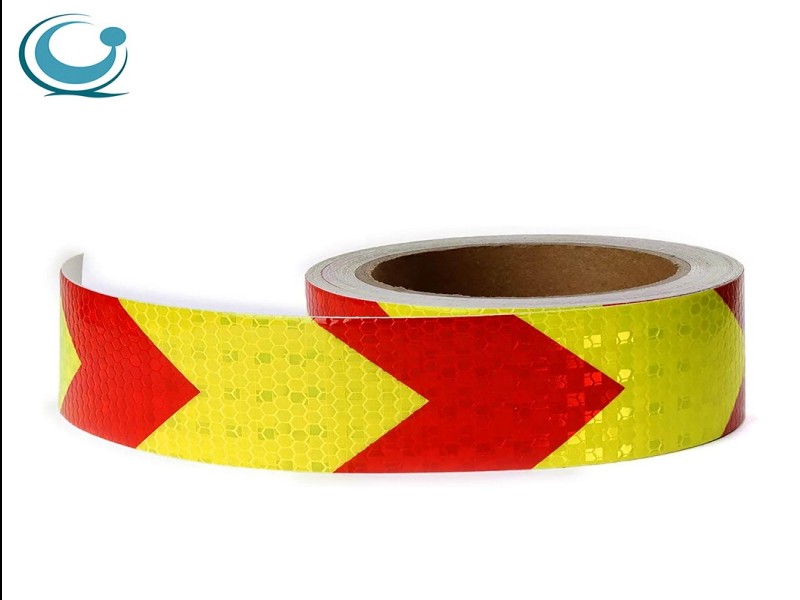
The most common application of Reflective Tape on commercial vehicles is contour marking. Rather than covering the entire surface, reflective strips are strategically placed along structural edges to trace the vehicle’s geometry. This method provides maximum visual clarity with minimal material use.
Typical placement areas include:
● Along the lower and upper side rails of trailers
● Around the rear frame to create a rectangular outline
● Across rear underride guards and bumper bars
● Along tankers or cylindrical trailers to define curvature
Below is a simplified overview of contour marking placement and safety function:
Placement Area | Purpose of Marking | Safety Outcome |
Trailer Side Rails | Define vehicle length | Improves side visibility during overtaking |
Rear Frame Outline | Highlight vehicle width and height | Reduces rear-end collision risk |
Underride Guards | Emphasize low rear structure | Prevents under-vehicle impact incidents |
Tanker Contours | Clarify rounded vehicle shape | Enhances distance perception at night |
Reflective strips help drivers judge the scale of a large vehicle under limited visibility. For example, when approaching a parked trailer on an unlit road, the illuminated contour provides an immediate visual boundary. This prevents misinterpretation of the vehicle as a distant object or shadow.
Because large vehicles present increased collision risks, many jurisdictions mandate the use of Reflective Tape under transportation safety regulations. These regulations establish minimum performance and coverage standards to ensure consistency and reliability across fleets.
In the United States, the Department of Transportation (DOT) requires conspicuity markings on heavy trucks and trailers above specified weight thresholds. In Europe, ECE 104 regulations define reflective material classifications and outline marking configurations for vehicles exceeding certain tonnage limits. While details vary by region, the regulatory framework typically addresses:
● Minimum reflectivity levels
● Approved colors (commonly red, white, or yellow)
● Required percentage of side and rear coverage
● Durability and environmental resistance standards
The rationale behind these requirements is straightforward: consistent marking improves recognition and reduces nighttime crash severity. Regulated vehicles must meet defined reflectivity thresholds to ensure that markings remain visible at significant distances when illuminated by headlights. Compliance is therefore not only a legal matter but also a measurable safety performance factor.
Reflective Tape improves nighttime safety because it uses retroreflection—a light-return behavior designed to send incoming light back toward its source instead of scattering it. In practical terms, when headlights hit a retroreflective surface, a high proportion of that light is directed back toward the driver. This creates a bright, concentrated signal that remains visible even when the surrounding environment is dark, rainy, or visually cluttered.
To see why that matters, it helps to compare how light behaves on different surfaces. A normal reflective surface (like a glossy painted panel) tends to bounce light away at different angles, which means only a small portion returns to the driver’s line of sight. Retroreflective material is engineered so that the light is returned toward the headlight/driver position, making the marked object easier to detect from farther away and at more useful angles.
● Standard reflection: Light spreads outward in many directions, so perceived brightness drops quickly with distance and angle changes. This is why many ordinary surfaces “flash” briefly and then disappear as you move. Standard reflection is not designed to keep the viewer illuminated.
● Retroreflection: Light returns along a path close to its incoming direction, so the observer receives a stronger, more consistent signal. That stability is what makes Reflective Tape stand out on vehicles, barriers, and safety markings.
Because the returned light is concentrated rather than dispersed, even a relatively narrow strip of Reflective Tape can look unusually bright at night. This is especially important for driving scenarios where reaction time depends on early recognition—drivers need to spot an object, identify what it is, and judge its position before they can respond safely.
Reflective Tape can achieve retroreflection through two common internal structures: glass bead construction and microprismatic construction. Both are designed to return light toward its source, but they differ in how efficiently they do it, how they handle viewing angles, and how they perform at longer distances.
Technology Type | Light Return Mechanism | Typical Application Context |
Glass Bead | Spherical beads refract and reflect incoming light | General signage, moderate-range safety marking |
Microprismatic | Engineered cube-corner prisms redirect light more efficiently | Vehicle conspicuity, roadway and high-demand visibility |
Glass bead tapes use embedded beads that act like tiny lenses. Incoming light is bent into the bead, reflected, and sent back outward in a controlled way. This design performs well for many everyday needs, such as general warning marking and moderate-distance visibility. However, the returned signal can appear less intense at long range or under more demanding viewing conditions, which is why glass bead systems are often viewed as more “general purpose” in performance.
Microprismatic tapes use precisely formed prism cells (often cube-corner structures) that return light with higher efficiency. The result is typically greater luminance and longer-distance detectability, which is valuable when drivers need to recognize objects earlier—especially around trucks, trailers, and highway environments. In high-speed conditions, earlier detection translates directly into improved reaction time: more distance to slow down, more time to judge lane position, and a clearer understanding of vehicle boundaries.
Choosing between these structures is essentially a decision about real-world performance demands. Where maximum visibility and compliance are required—such as regulated vehicle conspicuity marking—higher-grade reflective materials are commonly specified because their brightness and long-range performance help maintain consistent recognition. In lower-risk or slower-speed environments, standard-grade options may be sufficient as long as the tape is placed where it will actually be illuminated and kept free of heavy dirt buildup.
Together, these technologies explain why Reflective Tape remains an effective visibility tool across transportation systems. When retroreflective material is paired with smart placement—especially along edges and contours—it does more than “shine.” It helps define shape and scale in low light, turning vehicles and hazards into clearly readable forms that drivers can identify sooner and avoid more reliably.
Reflective Tape is a practical safety solution used in many sectors. It improves visibility on roads, in factories, and in daily life. By outlining vehicles and hazards, it reduces risks in low light. Understanding its uses helps people choose and apply it correctly. Zhejiang Quansheng New Material Technology Co., Ltd. provides durable, high-performance reflective materials that support safety, compliance, and long-term value across transportation and industrial applications.
A: Reflective Tape is used to enhance visibility on vehicles, equipment, and safety zones in low-light conditions.
A: Reflective Tape is typically placed along side rails and rear frames to improve vehicle conspicuity and reduce collision risks.
A: In many regions, Reflective Tape is required on heavy trucks and trailers to meet DOT or ECE visibility standards.
A: Reflective Tape is widely used in transportation, warehousing, construction, and industrial facilities for hazard marking.


